
For the weeks of Oct. 5 and Oct. 12:
Hello! Because I’m combining two weeks into one post, this log is pretty hefty, and it’s got a long preface to go with it. Things have been busy!
There’s been a lot of discussion around American higher education in the past few weeks. For those of you who may not be tuned into the conversation, the DJT Administration sent out a document called “Compact for Academic Excellence in Higher Education”, outlining a series of demands which includes “abolishing institutional units that purposefully… belittle… conservative ideas” in exchange for preferential access to federal funding. So far, five universities (mine included!) have rejected this compact, upholding merit as the dominant means of attaining federal money.
What is particularly concerning about the compact is that behind the demand for ideological reconfigurations in higher education, this compact aims to shift the rights of universities, which exist behind the objective protection of law, to the negotiable realm of “the deal”, the terms of which are ill-defined and completely under the determination of the DJT Administration. Essentially, the compact asks universities to sign away their rights, their leverage, and instead to enter into an unequal power dynamic with the federal government where funding is used as a straightjacket, forcing universities to capitulate in response to whatever action (this could be literally anything) the government deems as a violation of “the deal”. (Here, I’m synthesizing really fantastic analysis from UCLA Law professor Joseph Fishkin).
While I’m proud of the integrity and strength of these American universities, I’ve also been asking myself, “how did we get here?” How did we get to a point where the American(!) government would not only conceptualize a document imposing an explicit political ideology but thought it would actually get traction?
It seems that what the government is responding to is a fissure in the culture. What is happening in our country right now seems to be backlash against a sense of disrespect towards those on the right. This demonization is what the government is allegedly fighting, in all the wrong ways.
An example of this is the explicit rhetoric in some liberal spaces that one should not have respect for certain people who hold different beliefs. I take issue with this perspective for many reasons. (Not the least of which is that it’s often espoused by people who’ve never had to think their way out of, say, a conservative cultural milieu like the Deep South. This stance seems to me grossly self-congratulatory.) Mostly, I think this perspective gives up on young thinkers, many of whose world views are still quite malleable. While I don’t ever think the federal government should involve itself in the marketplace of ideas, we must find a way to internally resolve the sense of shame some feel for their thinking, shame which stifles critical debate, which hardens into resentment, which leads to radicalization and a vote accordingly.
So, maybe the best thing we can do for democracy, to fight political polarization, is to build relationships across the political aisle; perhaps this can act as a deterrent to radicalization, to extremism.
Here, I will return to the university. The opening line of the compact says that “American higher education is the envy of the world.” While I disagree with pretty much everything else the compact says, I happen to agree with this first line. American exceptionalism is real, and, while everyone knows that the American Dream is partially an illusion, I do believe that American education is particularly valuable specifically because of its integration of pluralism, of diversity. Stuck in a dialectical relationship, criticism of the American mission is precisely what keeps her alive. True, “American ideals” are rarely met, but to have a set of ideals is to have an aspirational set of standards against which one can measure oneself (I wrote about this in relation to International Law a few months back). Ideals are metrics we can use to measure where we stand now and how we can do better in the future. To live without ideals, is to live without a means of accountability.
I was speaking with my Italian roommate the other day about international education systems. Other countries supply the labor for their domestic economies according to competitive advantage; the United States does so according to comparative advantage. In many European and Asian systems, students pick their specialties sometimes as young as fourteen and spend the next decade training to become a classicist or a chemist. In the US, one doesn’t even have to pick their major until sophomore year; there are pros and cons, of course, but we’re allowed to double major, minor, and dabble in all sorts of fields until we find the one that most suits us, our interests, our talents.
The United States is about the only place in the world that would let a Business and Global Affairs major pursue an English PhD. In America, I’m told that my background is not a liability but rather an asset; that my background will likely help me produce unique scholarship. This outlook is profound and deeply American. This embracement of heterogeneity is precisely what sets the US apart; heterogeneity is what fuels the American mission and higher education. This diversity is indeed what makes all of this, in my opinion, worth protesting for, worth fighting for, worth pursuing.
Thanks for reading, and onto my log!
Books:
Pilgrim’s Progress (1678) by John Bunyan
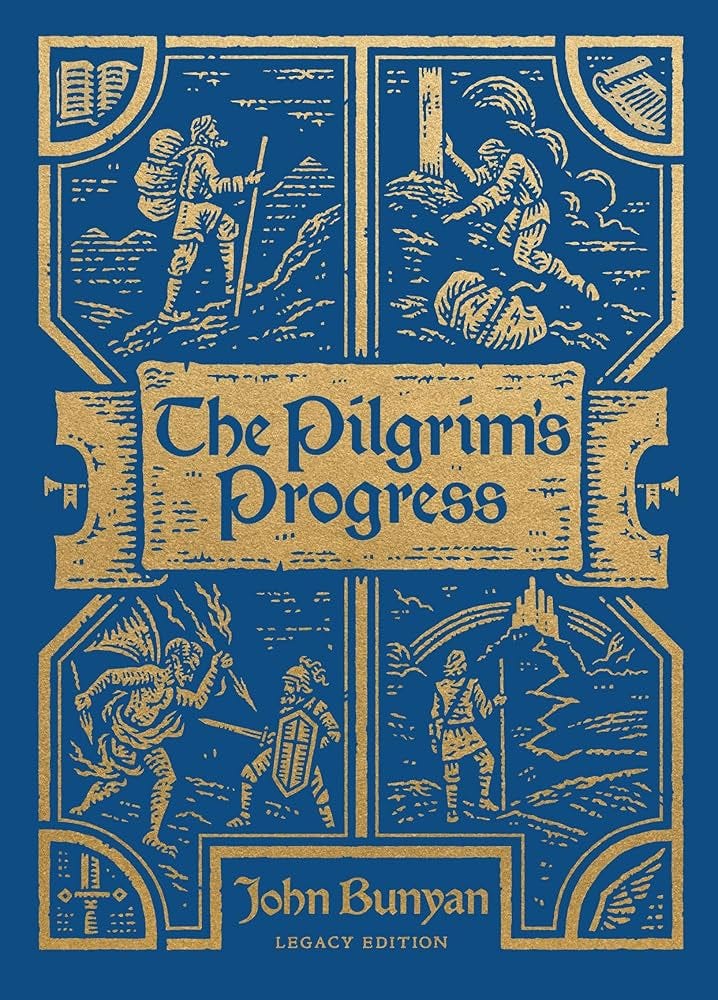
A very influential children’s book, Pilgrim’s Progress (1678) by John Bunyan tells the conversion story of a man named Christian as he traverses a fictional land full of castles, giants and characters named things like “Mony-love” in pursuit of the Gates of Heaven. This book was hugely popular when it first came out and has found its way into popular culture, across the centuries. Bunyan’s work inspired C.S. Lewis’s The Chronicles of Narnia and also makes an appearance in Little Women by Louisa May Alcott.
Clarissa (1748) by Samuel Richardson

Clarissa oh, Clarissa. Sigh. Clarissa, or, The History of a Young Lady (1748) by Samuel Richardson is written in the epistolary form (via letters), following Clarissa Harlowe as she is relentlessly pursued by Robert Lovelace, whom she explicitly rejects. Lovelace plays the role of a supervillain, as he psychologically manipulates, kidnaps, and physically assaults Clarissa, whom the Harlowe family has all but abandoned. This book played an important role in the historical development of the novel, as it focuses on the interiority of the characters, as opposed to external events (which is characteristic of epics). This book was fifteen hundred pages. Richardson famously said that, though he tried, he could not find places to cut… I don’t think he tried hard enough?
The Marrow of Tradition (1901) by Charles W. Chesnutt
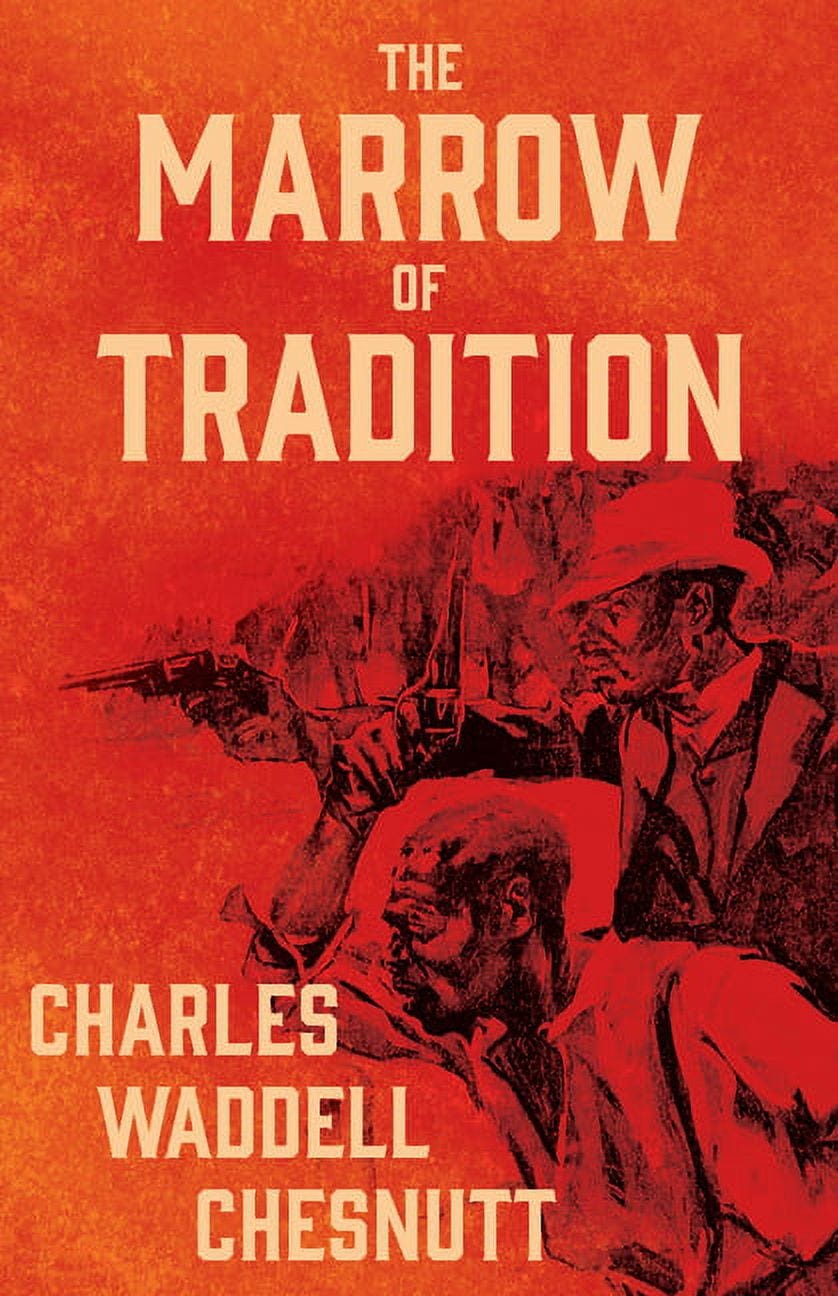
The Marrow of Tradition (1901) was written by Charles W. Chesnutt a lawyer-turned-novelist. It follows the Carteret family, which subscribes to white supremacy (although strange to many of us now, this was a legitimate political stance in the late 19th C) after the Civil War. We also follow Dr. William Miller, a Black surgeon, as he aims to improve his position in society through professionalism. The two men’s lives become intertwined in what I will describe as a family tree rivaled only by Wuthering Heights (one of the greatest novels of ALL TIME). I only got half way through this one, but I do hope to finish it, if only because Chesnutt does an incredibly astute job of explain the “logic” of racism while exposing its fallacies (he was a lawyer after all!).
The Future of an Illusion (1927) by Sigmund Freud
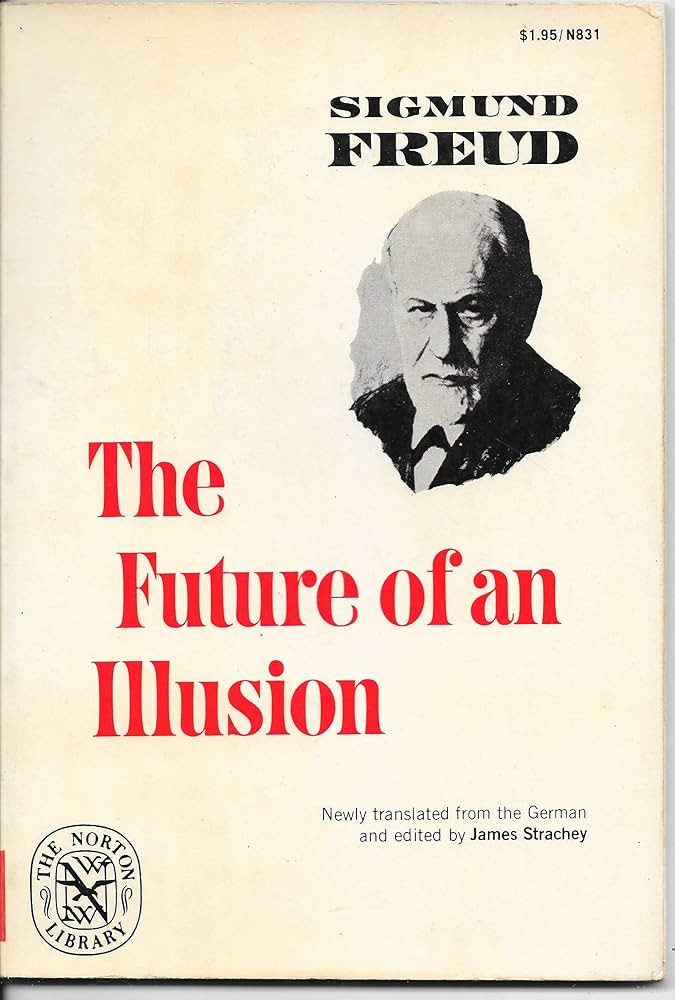
The Future of an Illusion (1927) by Sigmund Freud is a staunchly atheist text, which was published three years before Civilization and Its Discontents. While I’m not an atheist (though I’ve certainly gone through periods…), this was an illuminating read, and I do think certain aspects of his argument hold truth. Freud says religion is “the universal obsessional neurosis of humanity” and that “by accepting the universal neurosis [the individual] is spared the task of forming a personal neurosis” (79). Essentially, he paints religion as a coping mechanism to help us reconcile living in a repressed civilization (which he later goes on to explain, leaves us discontent). Although certainly subversive, this analysis does not strike me as wholly inaccurate, particularly for the subset of people who become consumed, obsessed with following doctrine. While culture might imbue neurosis with a distasteful connotation, Freud treats it with a rather medical neutrality.
Movies/TV Shows:
Perfect Blue (1997)

Perfect Blue (1997) directed by Satoshi Kon follows Mima, a singer turned actress who increasingly becomes paranoid about a stalker of hers. This was a bizarre watch that teetered between enjoyable and frustrating. To some degree, this movie felt artistic for the sake of being artistic. I will admit my opinion is in my minority here. (I would recommend checking trigger warnings for this one).
Django Unchained (2012):

Django (2012) directed by Quentin Tarantino follows a former slave Django and his compadre Dr. Schultz, a German bounty hunter, as they trek through slave country to find Django’s wife Hildi. This movie is fun. Tarantino has certainly got his own style, which is consistent across his entire portfolio, and Django is no exception. Slave masters make for great super villains and this film manages to dramatize, without diluting, what is, at its core, a sensitive story about the trauma of slavery.
Fallout (2024):
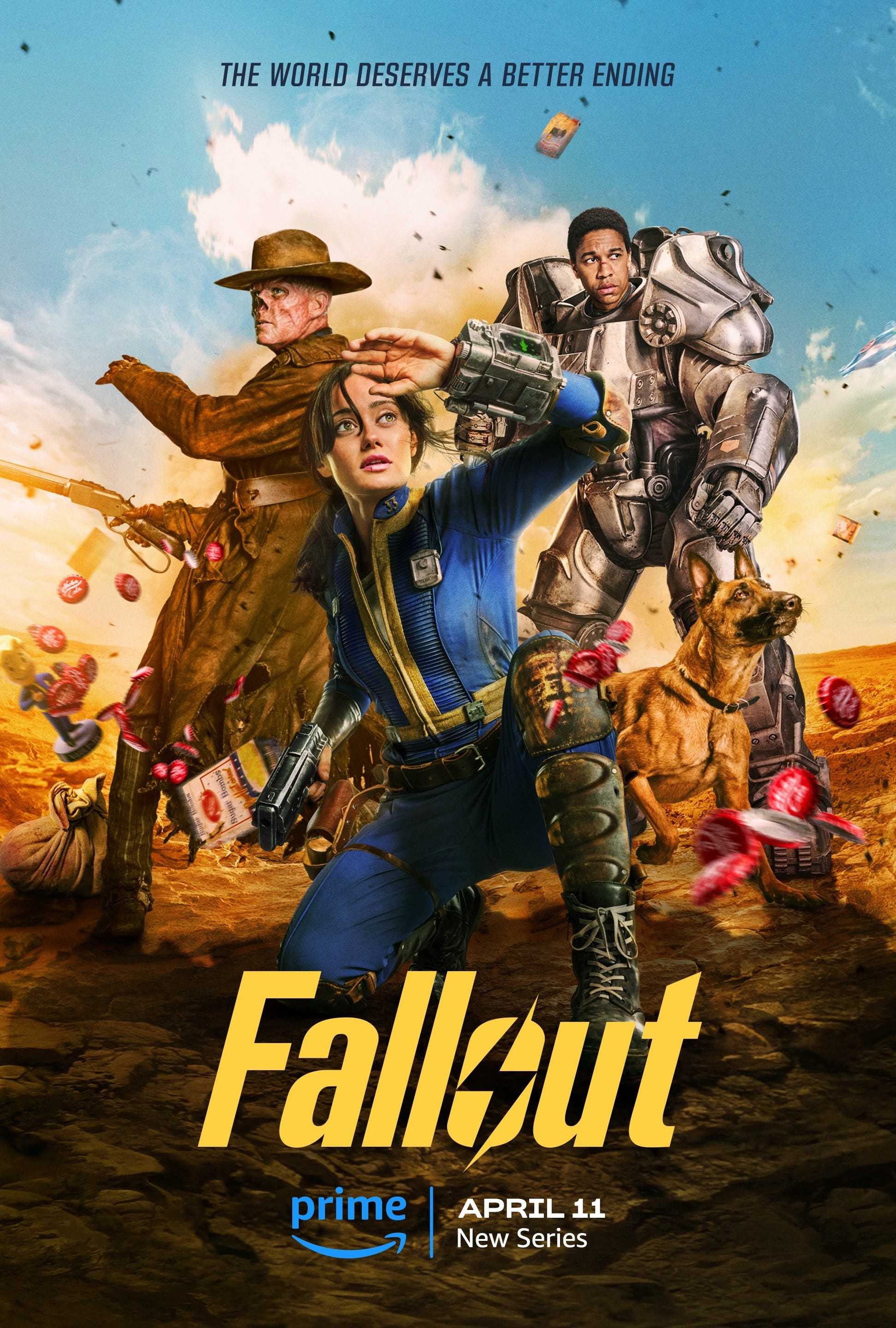
Fallout (2024) is a TV show based on a video game I have never played. Set in a post-apocalyptic California, It follows Lucy as she emerges from an underground vault onto “the surface” to find her missing dad. Here she meets the Ghoul, a bounty hunter, who manages to evade death by drinking potions, and Maximus, a knight of the “Brotherhood”, which is some kind of military (?) organization. I was pleasantly surprised by this series. The characters are strong, the plot is compelling, the writing is good, and most of all, the aesthetic of the show, which blends the vintage style of the sixties with the apocalypse, is incredibly fun to watch. The second season comes out in December!
Tron: Ares (2025):
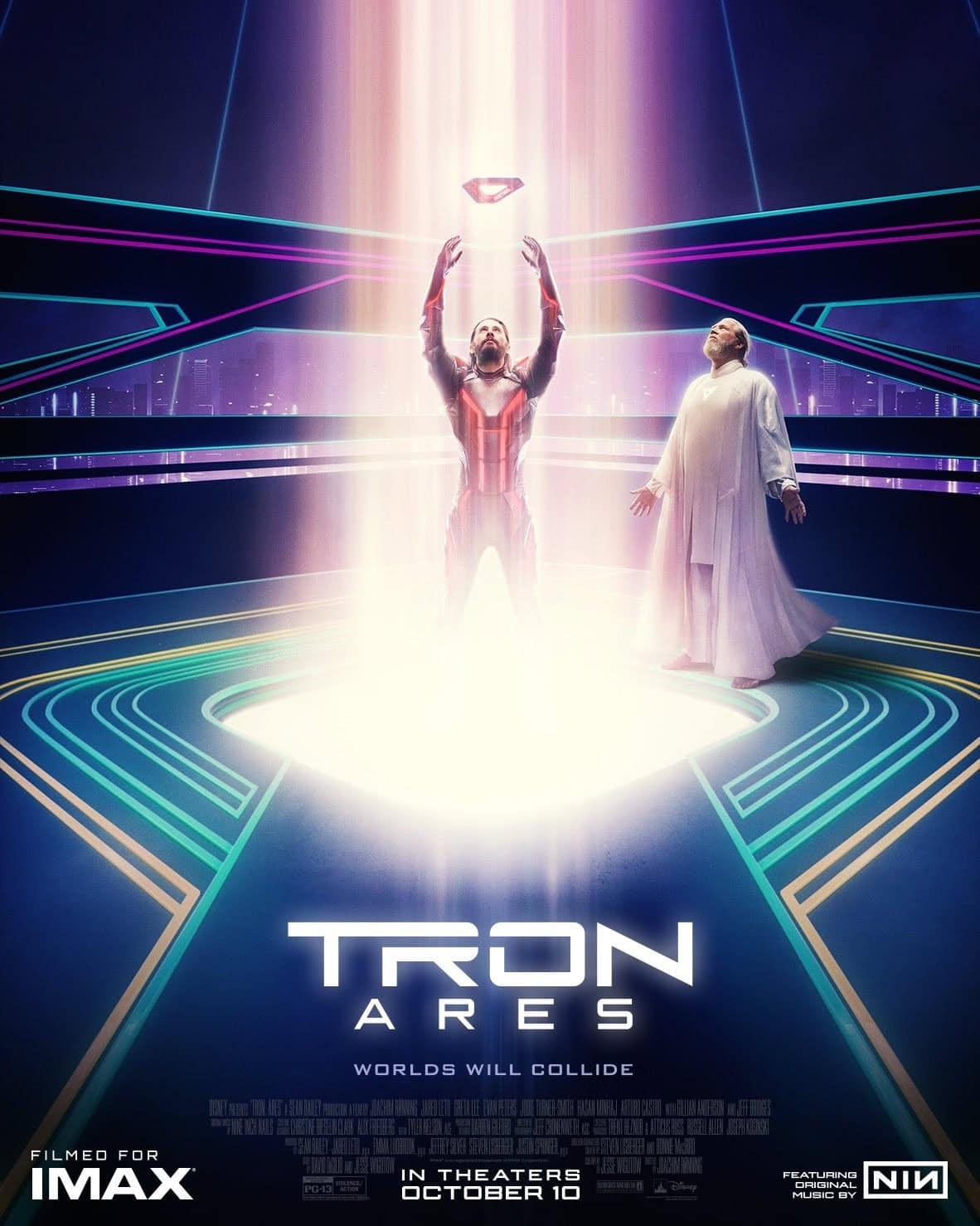
Tron: Ares (2025) is a blockbuster release that follows Ares, a humanoid AI robot created for the military. I have not seen any of the previous Tron movies, but this one strikes me as the epitome of a “blockbuster movie”. Essentially, it is sludge packaged in cool CGI visuals. It was a mindless watch, which is okay sometimes!